


Delhi, 31st October 2025: Only few leaders embody the balance of innovation, strategy, and people-first leadership in today’s rapidly evolving world. With hands-on expertise spanning AI-driven development, DevOps, cloud infrastructure, and enterprise delivery pipelines. From architecting multi-model AI systems that transform software workflows to aligning business goals with technical roadmaps, he brings a unique perspective shaped by both technical depth and strategic foresight.
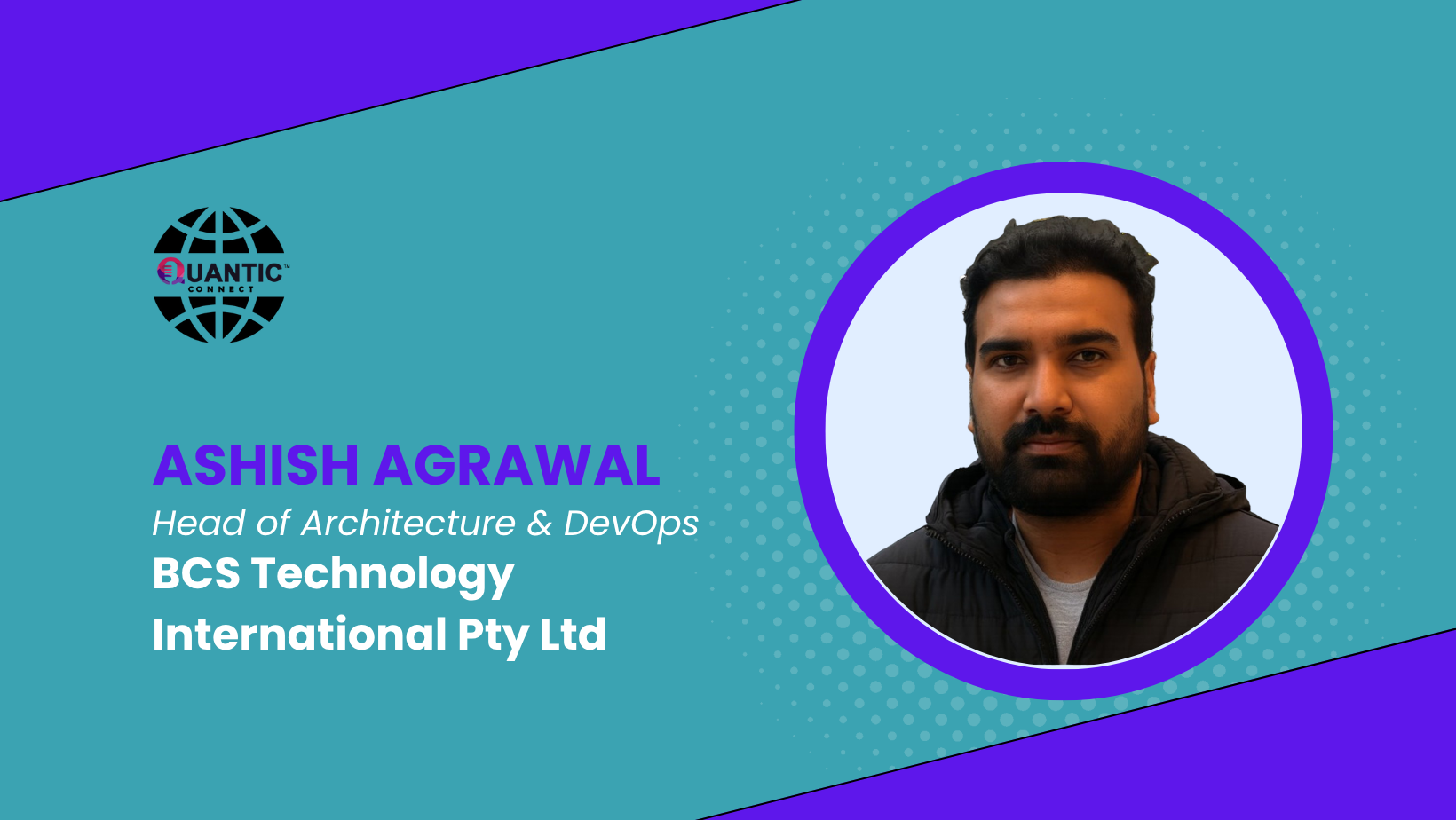
Join Mr. Ashish Agrawal, Head of Architecture & DevOps at BCS Technology International Pty Ltd in an interesting conversation with Mr. Marquis Fernandes who spearheads the India Business at Quantic India, as he shares insights on leveraging AI in real-world scenarios, designing collaborative pipelines, evolving as a leader, and even finding balance beyond the screen.
Can you share a practical scenario where AI meaningfully improved a product or process you worked on?
At our company, we developed a comprehensive AI system using multiple specialized models to transform our software development workflow. The AI handles four critical areas: automated code reviews that catch quality issues and style violations before human review, intelligent test case generation that creates comprehensive test suites including edge cases developers might miss, code optimization suggestions that improve performance and reduce technical debt, and automated documentation generation that keeps our codebase well-documented without manual effort.
By implementing these AI-powered processes, we’ve significantly reduced our development lead time since quality assurance tasks now run in parallel rather than sequentially, while simultaneously improving our delivery quality. The multi-model approach allows us to leverage the strengths of different AI systems – some excel at security vulnerability detection while others are better at generating readable documentation. This has freed our senior developers to focus on architectural decisions and complex problem-solving rather than routine quality checks, ultimately creating a more efficient and higher-quality development pipeline that delivers better products faster.
You’ve architected both applications and cloud infrastructure. How do you align architectural decisions across Dev, infra, and business needs when drafting proposals or responding to RFPs?
When aligning architectural decisions across development, infrastructure, and business needs, I adopt a collaborative and holistic approach. Firstly, I engage with key stakeholders from each domain early in the proposal or RFP process to understand their specific priorities, whether it’s performance, scalability, cost-efficiency, or compliance.
I apply a framework that balances technical feasibility with business objectives. This involves mapping out the technical architecture to highlight dependencies, potential bottlenecks, and scalability options. Simultaneously, I ensure alignment with business goals by incorporating metrics that reflect value delivery, such as time-to-market and cost projections.
Regular cross-functional reviews are integral, fostering transparent communication and iterative feedback. These sessions help identify trade-offs and consensus points, ensuring that the architectural decisions support both the technical roadmap and business strategy. Additionally, leveraging cloud-native solutions with modular designs allows flexibility, making it easier to adapt to evolving requirements across Dev, infra, and business landscapes.
You’ve led projects across DevOps, AI, and .NET. How do you design a delivery pipeline that balances developer productivity with infrastructure scalability?
When I think about a delivery pipeline, I see it as a culture, not just a tool. The pipeline should bring together developers, QA, DevOps, and infrastructure teams in a shared process where everyone knows their role.
We’ve standardized this by building ready-made templates. These templates live in a common library and act as modules that teams can reference. A micro service or application only needs to pass in its own dynamic details, everything else (build, security checks, observability, deployment stages) comes pre-wired. This keeps things consistent and lets developers focus on features rather than reinventing pipelines.
For productivity and quality, we emphasize fast feedback loops: SonarQube for code quality, security scans to catch issues early, and unit tests that run on every commit. Developers get immediate signals about their code, which means fewer surprises later.
The process itself is collaborative:
- During code review, coding guidelines are mandatory.
- QA tests the system and has the authority to approve progression in the pipeline.
- If pre-production is stable, the business signs off before anything moves to production.
Because much of this is automated in the pipeline, stakeholders don’t need to chase approvals, it just flows. Everyone has a clear responsibility, but the system ensures handoffs are smooth and auditable.
This balance of automation + accountability is what keeps us fast while still being safe. Developers move quickly, infrastructure scales confidently, and the business knows quality is never compromised.
If you would be mentoring your younger self just starting out, what’s one mindset hack or piece of career advice you’d insist they follow?
If I could mentor my younger self, I would stress one mindset hack above all: focus on compounding growth instead of chasing quick wins. When I started out, technology was progressing, but nothing like the pace we see today with open source and AI. Back then, you often waited for someone to give you an opportunity; today, the real edge is in creating your own by contributing, experimenting, and building your personal brand. I would tell myself to invest in habits early, because skills compound like interest, rather than depending on someone else to provide direction. Play the long game with consistency, much like practicing a T20 match to prepare for the marathon of a Test series. And above all, stay curious. Curiosity is what keeps you adaptable, relevant, and excited to grow as the industry evolves.
After handling tech fire drills all week, how do you unwind? Any unusual hobby, game, or weekend ritual you swear by?
After a week of handling tech fire drills, I make it a point to unplug and recharge through activities that feel refreshing and creative. Traveling is one of my favourite ways to reset, it exposes me to new cultures, ideas, and experiences that broaden my perspective beyond technology. When I’m home, I find joy in experimenting with new recipes in the kitchen, as cooking allows me to be hands-on and inventive in a completely different way. I also rely on fitness and long walks to clear my head and bring back balance after an intense week. These simple rituals, whether exploring a new place or trying a new dish, help me stay curious, grounded, and energized for the challenges ahead.
How has your leadership style evolved over time?
My leadership style has evolved from being very task- and execution-focused in the early years to becoming more people-centric and strategic today. Initially, I believed success came from solving problems myself as quickly as possible, but over time I realized the real impact comes from enabling others to succeed. I now focus on building trust, setting clear direction, and empowering teams with autonomy while still providing guardrails. Collaboration and transparency are central, and I encourage open feedback to keep learning as a leader. With experience, I’ve also learned that leadership is less about control and more about creating an environment where innovation, accountability, and growth can thrive.
From scaling AI-powered delivery pipelines to shaping people-first leadership, Mr. Ashish Agrawal’s journey reflects how modern technology leadership is as much about mind-set and adaptability as it is about architecture and tools. His emphasis on compounding growth, collaborative cultures, and human-centric innovation highlights a playbook for aspiring leaders navigating today’s fast-paced tech ecosystem. As he reminds us, curiosity, clarity, and trust remain the timeless anchors, whether building next-gen systems, leading global teams, or finding balance beyond the screen.
