



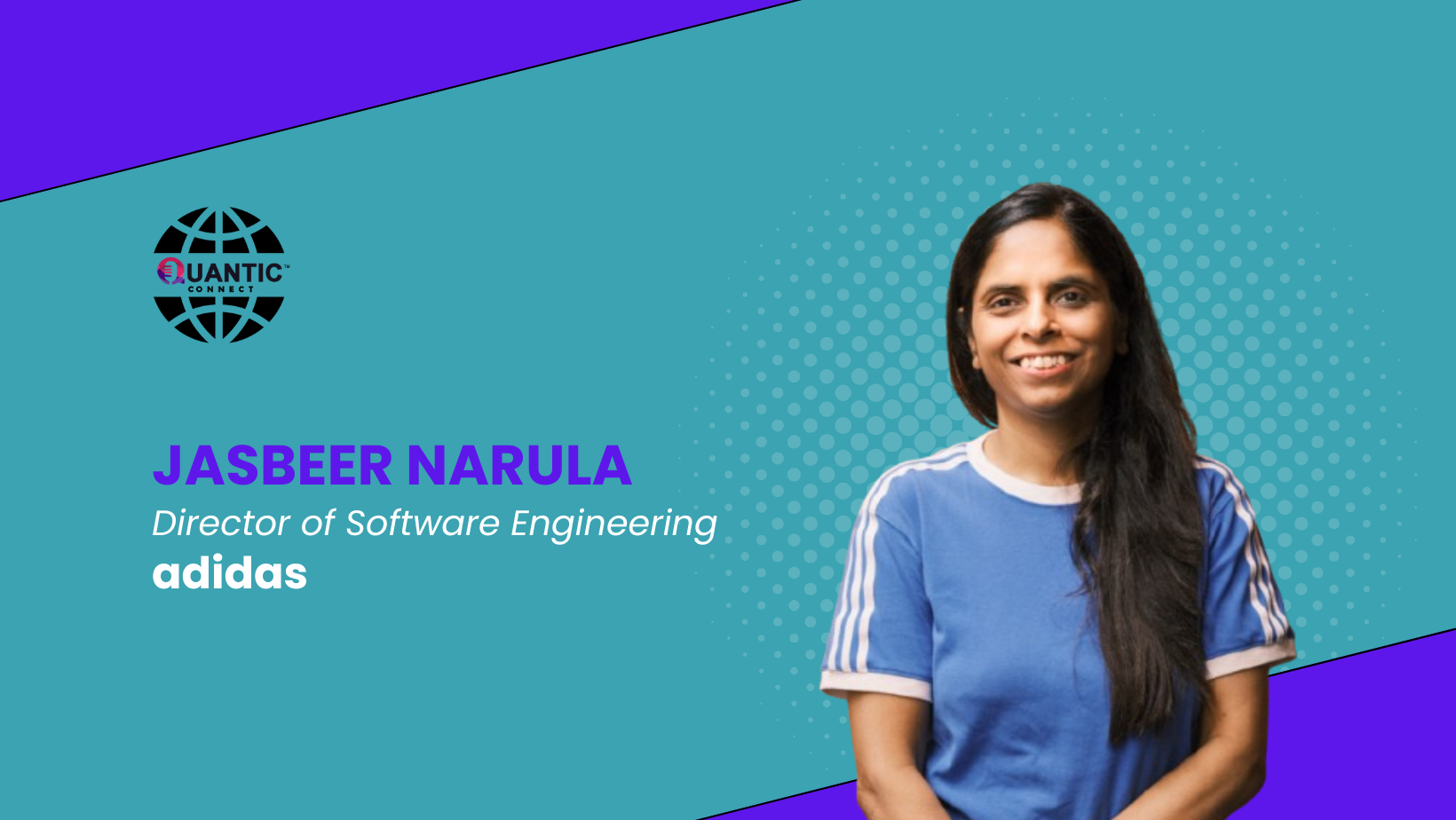
Delhi, 10th September 2025: In today’s engineering landscape, building high-performing teams goes far beyond just delivering code, it’s about fostering innovation, autonomy, and a culture of continuous learning. In this conversation, we explore how frameworks like the 80:20 principle, IDPs, and the T-Shape Journey are driving engineering excellence, how aligning teams to value streams accelerates outcomes, and why personalized mentoring can shape confident, empathetic leaders. From real-world success stories to leadership lessons inspired by unexpected places, this interview offers a masterclass in creating motivated, future-ready engineering teams.
Join Ms. Jasbeer Narula, Director of Software Engineering at adidas in an interesting and engaging conversation with Mr. Marquis Fernandes who spearheads the India Business at Quantic India.
You mention implementing the 80:20, IDP, and T-Shape Journey frameworks. Can you share a real-world example where these initiatives directly contributed to engineering excellence or team performance?
Real-world impact of 80:20, IDP, and T-Shape Journey frameworks
Implementing the 80:20 principle allowed us to dedicate 20% of our time to innovation and learning, which directly fed into our delivery excellence. One example: a team member used their 20% time to explore observability tools, which led to a production-grade implementation that reduced MTTR by 30%.
Given that we’re not actively hiring, we’ve leaned into internal upskilling as a strategic lever. We assess where the future is headed, whether it’s cloud, big data, or GenAI, and identify the skills our teams need to stay ahead. That 20% time becomes a focused investment in learning. Recently, several Java backend engineers used this time to build proficiency in AWS and Big Data, enabling them to deliver end-to-end stories without relying on separate data teams. This not only improved velocity but also fostered a sense of ownership and pride.
The IDP (Individual Development Plan) framework helped us personalize growth paths, especially for mid-level engineers transitioning to tech leads. It gave them clarity on their aspirations and the support to get there.
The T-Shape Journey enabled cross-functional fluency. A backend engineer who embraced frontend skills became a bridge between teams, accelerating feature delivery and reducing handoffs.
Ultimately, these frameworks aren’t just about skill-building, they’re about creating a culture of autonomy, challenge, and engagement. By giving engineers meaningful opportunities to grow and contribute, we’re keeping them motivated, happy, and deeply connected to the impact they’re making.
What specific strategies have worked best for you when transforming an engineering team into a value stream–driven organization?
Strategies for Transforming an Engineering Team into a Value Stream–Driven Organization
One of the most effective strategies has been aligning product teams around shared outcomes rather than isolated deliverables. In traditional setups, each product team often operates with its own priorities, leading to siloed execution and misaligned timelines. This fragmentation slows down delivery and dilutes impact.
To address this, we restructured teams to work as one cohesive unit, aligned to a common value stream. This included:
- Shared delivery leads to ensure unified direction and accountability.
- Common KPIs that reflect business value rather than team-specific metrics.
- Joint agile ceremonies like planning, stand-ups, and retrospectives to foster transparency and collaboration.
This alignment helped us reduce dependencies, improve flow efficiency, and significantly accelerate time to market. Engineers began to see the bigger picture, how their work contributes to customer value, and that shift in mindset was just as powerful as the structural changes.
Mapping work to value streams also enabled better prioritization, clearer stakeholder communication, and a stronger sense of ownership across teams.
Mentoring plays a pivotal role in your leadership. How do you customize mentoring for engineers across different stages of their growth, from early career to tech leads?
Customizing Mentoring Across Career Stages
For early-career engineers, I focus on confidence-building and foundational skills, through pair programming, regular feedback loops, and exposure to different parts of the stack. The goal is to help them build technical depth while feeling safe to ask questions and experiment.
For mid-level engineers, mentoring shifts to ownership and autonomy. I encourage them to lead small initiatives, mentor junior teammates, and navigate ambiguity. This stage is about helping them find their voice and build influence.
For tech leads, the focus is on strategic thinking, stakeholder management, and architectural depth. I often use real scenarios to coach them on trade-offs, decision-making, and how to influence without authority.
Across all levels, I tailor mentoring to their aspirations, whether it’s deep tech, leadership, or product thinking. A key part of my approach is to empower engineers by giving them real challenges and trusting them to lead. I provide initial guidance, then step back and allow them to take ownership, even if it means they might fail. That space to learn through experience is where true growth happens.
I also ensure they have a clear path to learn, whether through curated resources, hands-on opportunities, or peer learning. I help them find the right opportunities that align with their strengths and goals, and guide them toward becoming empathetic, technically strong leaders as they grow.
Mentoring, for me, is not just about skill development, it’s about shaping confident, thoughtful, and empowered individuals who lead by example and inspire others.
“Learn and Grow” is your melody. If you had to conduct a master class on it, what would the core topics of teaching be?
Empowered Learning Culture – Creating environments where failure is safe, challenges are real, and learning is continuous, because growth thrives where trust and opportunity meet.
What’s one lesson you’ve learned from the kids at the orphanage that you think every leader should embrace?
One powerful lesson I’ve learned is the value of presence over perfection. The kids don’t expect you to have all the answers, they just want you to show up, listen, and care. As leaders, we often chase outcomes, but sometimes the most impactful thing we can do is be genuinely present for our teams. It builds trust, empathy, and connection, qualities that no metric can measure but every team needs.
Imagine a dream day with your team, no KPIs, no sprints. What unconventional activity would you organize to fuel innovation and bonding?
I’d organize a “Reverse Hackathon”, where instead of solving problems, teams create them. They’d invent wild, futuristic challenges, and then swap them with other teams to brainstorm solutions. It would spark creativity, laughter, and cross-pollination of ideas. We’d end the day with a bonfire-style storytelling session where everyone shares their most unexpected insights or learnings.
As this conversation with Ms. Jasbeer Narula reveals, true engineering excellence isn’t just about frameworks, tools, or delivery speed, it’s about creating environments where people feel empowered to learn, innovate, and lead with empathy. Whether it’s through structured approaches like the 80:20 principle and value stream alignment or the softer lessons of presence, trust, and mentoring, her insights highlight that the future of engineering leadership lies at the intersection of human connection and technical mastery. For leaders and teams alike, the message is clear: growth is not a destination, but a continuous journey of learning, adapting, and enabling others to thrive.
