


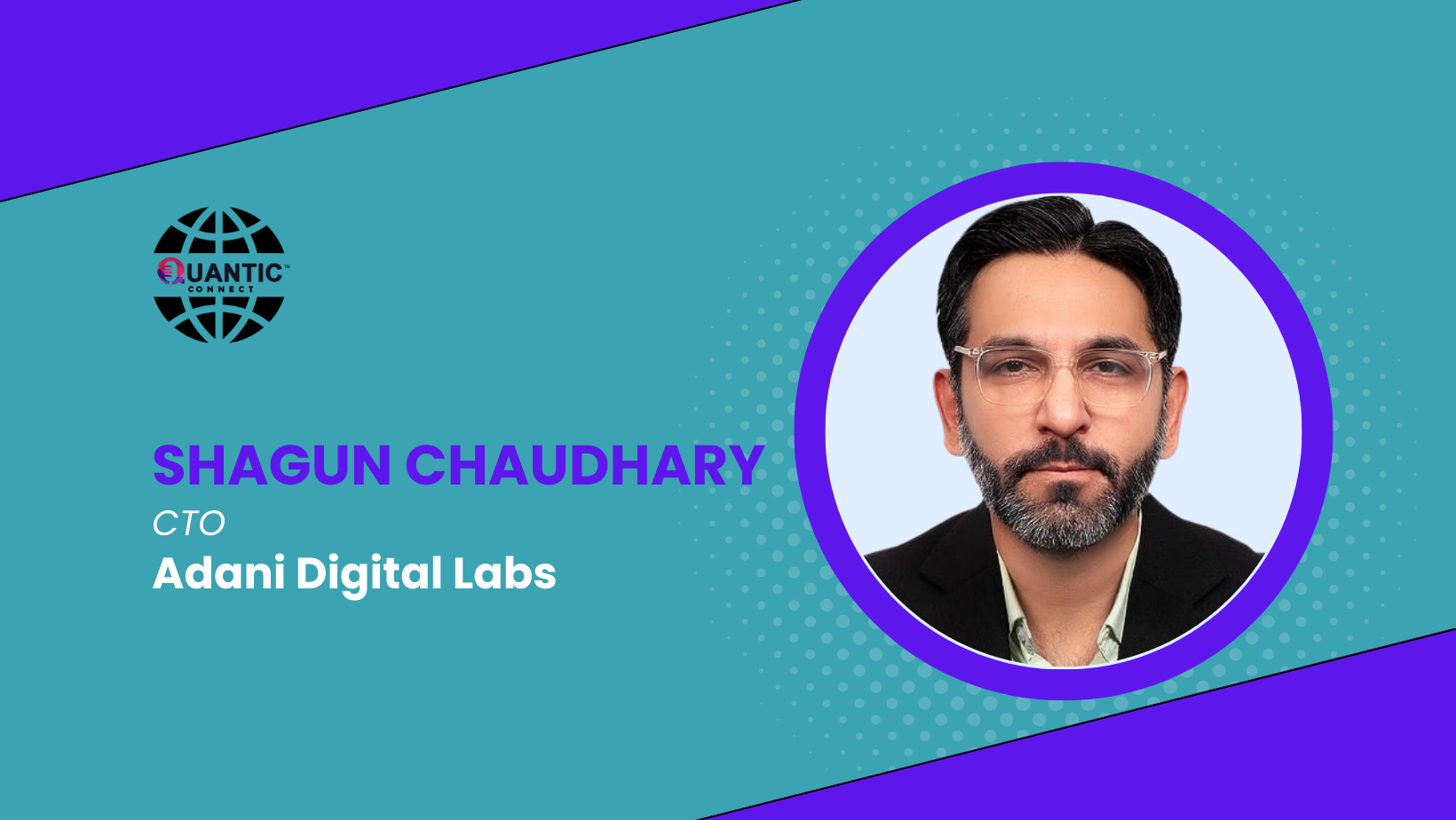
Delhi, 29th August 2025: In a world where digital transformation is relentless and disruption is the new normal, exceptional technology leaders don’t just adapt, they architect resilience. From designing future proof platforms to fostering engineering cultures rooted in purpose and performance, the hallmark of an agile enterprise lies in its ability to harmonize cloud, code, culture, and communication. In this exclusive feature, we delve into the strategic vision of Mr. Shagun Chaudhary, Chief Technology Officer at Adani Digital Labs, a leader known for turning complex global operations into seamlessly scalable, self-sustaining systems.
In conversation with Mr. Marquis Fernandes, who leads the India Business at Quantic India, Mr. Chaudhary shares insights from his cross continental leadership experience across EMEA, APAC, and North America. From building adaptable tech stacks to nurturing high performance teams and embracing the thrill of speed, whether in the cloud or behind the wheel, this dialogue offers a rare peek into the mindset of a CTO who blends precision, passion, and purpose in everything he does.
As a technology agnostic leader, how do you decide when to adopt a new technology stack versus optimizing what’s already in place?
If it’s a Greenfield project or independent module, it’s a No Brainer, use the latest tech stack, considering the way technology is advancing, what is latest today will also need upgrade very soon. Hence even as part of the work we do, we validate how things are and its continuous upgrade to the latest versions and I would say 3 years to 5 years is an ideal time for upgrading the tech stack at max. Regular Upgrades is a continuous process, to be having latest Security patches etc.in place, so this has to happen even if you chose a latest tech stack to be compliant and ahead in the game.
You’ve led high performing, cross geo teams across EMEA, APAC, and NA. What have you found to be the most effective strategies for ensuring alignment, innovation, and morale at a global scale?
Each Geography has its own nuance, one thing that stays common across all is Communication and Transparency. Make sure you don’t over commit, having clarity and present the right plan. In case of any changes you foresee, be proactive in discussing, than being reactive in informing at the last moment. Always suggest what you feel is right for the project, and be vocal, don’t assume, ask when in doubt. Also don’t expect people to ask what you can do differently, instead come up with innovative solutions, at least once in six months if not in quarter, suggest or implement which optimises the effort/cost which makes you stand out from the rest. Celebrating even small wins, is a big Moral Booster, sometimes all people want to get is acknowledgement.
Having led initiatives from RFI to BAU, what advice would you give to aspiring tech leaders about building self-sustained teams that thrive even in your absence?
Documentation is the key to success. Lot of time, systems fail or break due to people dependency. You can create next level of leaders by delegating to them and giving them that visibility and asking to document things and sharing knowledge. One key practice I have followed across Organisations is having people present what they learnt, and would like to share to the others. That brings visibility to them at one place, but also awareness for the rest, to also use that capability in their program. Documentation always help, and discussions on Architecture or way things are to be setup gives more people awareness of why and how.
You’ve spoken at IIM and led major transformations, what’s a lesser known moment of learning that completely changed your outlook towards winning?
You can’t win alone, you have to bring people along. So find that sweet spot, where you get alignment, and people agree. Not all ideas are best, however picking up the right idea basis the time, effort available at hand, and have a roadmap to go in a phased approach, than trying to solve everything in one go. You would usually not like to spend months to take first thing out and then say doesn’t make sense, so phased approach is the way to test and succeed.
If you weren’t a CTO, what would your alternate dream career be, and how close are you to still doing that in your free time?
F1 Racer! Considering the Speed Cameras, that’s not possible in majority of places now. However I still love to drive to places!!
What does a healthy team practice look like under your leadership?
Where people are open enough to accept mistakes and not find someone to be blamed. They can approach you freely share something happened and come up with a choice of options on how to fix it as well and then work collaboratively to solve it. This goes a long way, where that culture is then carry forward.
