


Bengaluru, 3rd September 2025: Today cybersecurity leaders are navigating an increasingly complex landscape where threats evolve as quickly as the technologies designed to defend against them. Beyond firewalls and frameworks, the real challenge lies in aligning security with business objectives, preparing for emerging risks, and nurturing the next generation of security leaders.
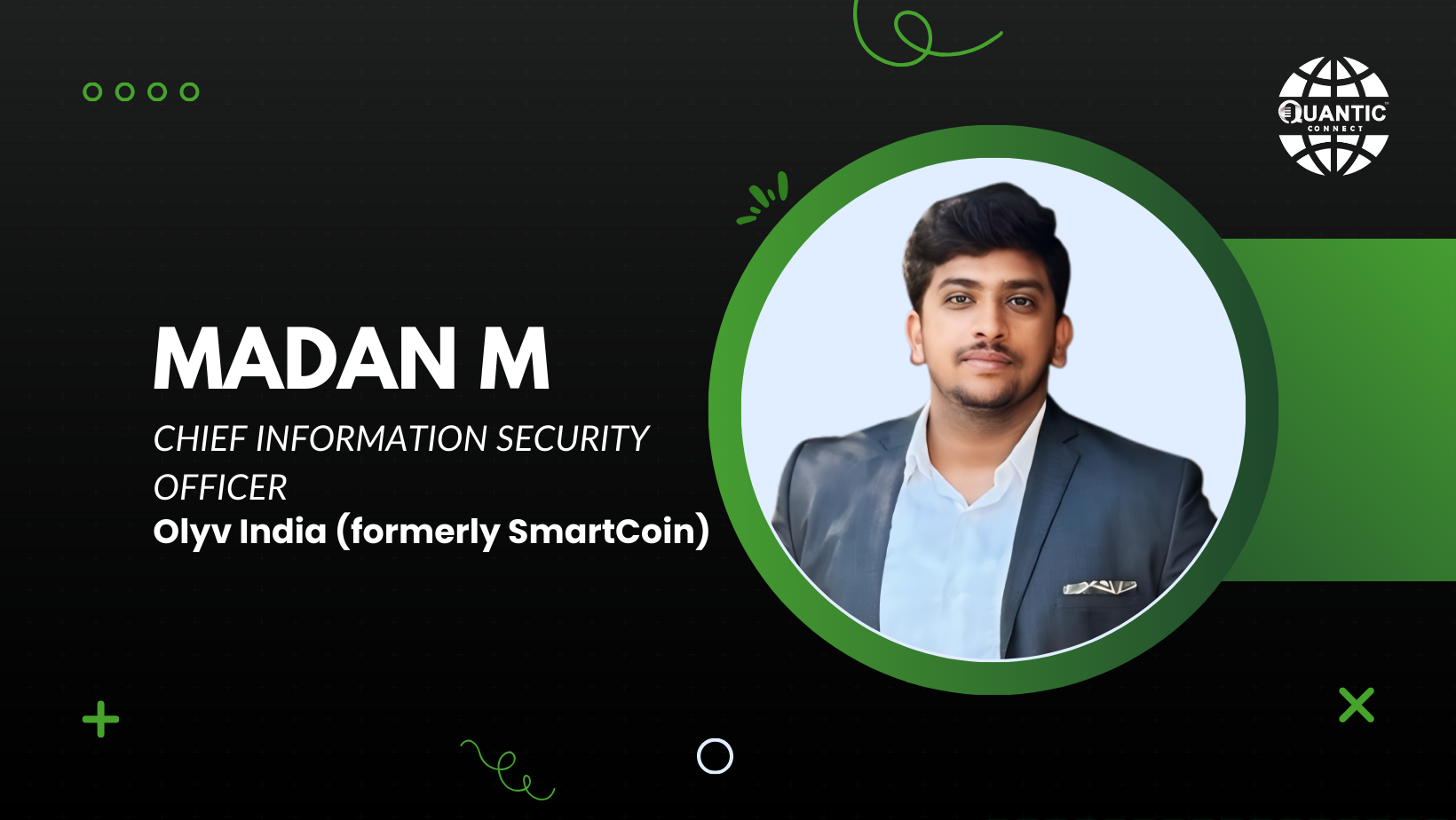
In this conversation with Mr. Marquis Fernandes (Director – India Business, Quantic India) Mr. Madan M, Chief Information Security Officer at Olyv India (SmartCoin), shares his perspectives on bridging the gap between security and business, the top risks shaping the fintech and cloud-native future, and the mindset shifts required to thrive as a modern CISO.
Many CISOs struggle with aligning security with business outcomes. What strategies have you found most effective in getting buy-in from non-technical stakeholders?
The key is to speak the language of risk and revenue. Instead of presenting vulnerabilities in technical terms, I link them to customer trust, regulatory penalties, reputational impact, and even market competitiveness. Simple visuals, real-world analogies, and business impact stories help bridge the gap. When executives see security as protection of brand value, buy-in becomes much easier.
With rising threats around cloud-native environments and fintech apps, what are the top 3 emerging risks CISOs must prepare for in the next 2 years?
The first major risk is AI-powered fraud, where attackers are using generative AI for synthetic identities, deepfakes, and highly targeted phishing that can bypass traditional fraud controls. The second is supply chain vulnerabilities, as fintechs depend heavily on third-party APIs, cloud services, and open-source tools, any weakness in these integrations can expose sensitive data or disrupt operations. The third is cloud misconfigurations and data leakage, particularly in complex environments using microservices, containers, and serverless platforms. Simple mistakes in access controls, storage settings, or identity management remain one of the most common causes of breaches. To stay ahead, organizations need stronger detection, vendor risk governance, and built-in security across development pipelines
As a CISM-certified leader, how do you mentor young cybersecurity professionals to think strategically beyond tools?
I encourage them to focus on the “why” of security, understanding business risk, governance, and long-term impact instead of just mastering tools. I involve them in tabletop exercises, risk discussions, and governance reviews early in their careers. This develops a strategic mindset so they grow into future security leaders, not just tool specialists.
Cybersecurity often feels like a battlefield. If you had to compare your leadership style to a superhero or warrior, who would it be and why?
I’d say Iron Man, because I believe in blending technology, strategy, and human ingenuity. Like him, I rely on innovation, but the true strength lies in quick, calculated decision-making under pressure.
Looking back at your journey from IBM to CISO at Olyv, what’s one moment of doubt you overcame that made you stronger as a leader?
Transitioning from large enterprises like IBM to a fast-growing fintech was daunting. I initially doubted whether big-company security playbooks would work in a startup environment. But adapting, unlearning, and staying agile proved that structured frameworks can coexist with star-tup speed. That experience made me a far more resilient leader.
If you were mentoring your younger self just starting out in cybersecurity, what advice would you give?
“Don’t chase tools, chase fundamentals”. Tools will change constantly, but understanding risk, governance, and human behaviour will make you future-proof. That’s the advice I wish I had received earlier.
Mr. Madan’s journey from global enterprises to the fast-paced fintech world underscores a crucial lesson: effective cybersecurity leadership is less about tools and more about strategy, adaptability, and vision. By translating technical risks into business impact, anticipating emerging threats, and mentoring future leaders, CISOs like him are redefining what resilience means in the digital era. His story is a reminder that cybersecurity is not just about defense, it’s about enabling trust, protecting innovation, and securing the foundations of tomorrow’s businesses.
