



Bengaluru, 2nd September 2025: In today’s rapidly evolving financial landscape, organizations must balance the demands of innovation, regulatory compliance, and operational efficiency. Experts in FinTech and BaaS shed light on how integrating technology with strategic leadership can accelerate business growth, streamline customer journeys, and enhance decision-making. By embedding security, scalability, and compliance into the design of cloud-native platforms, and adopting proactive, compliance-focused approaches, financial institutions can achieve sustainable transformation while safeguarding trust and resilience.
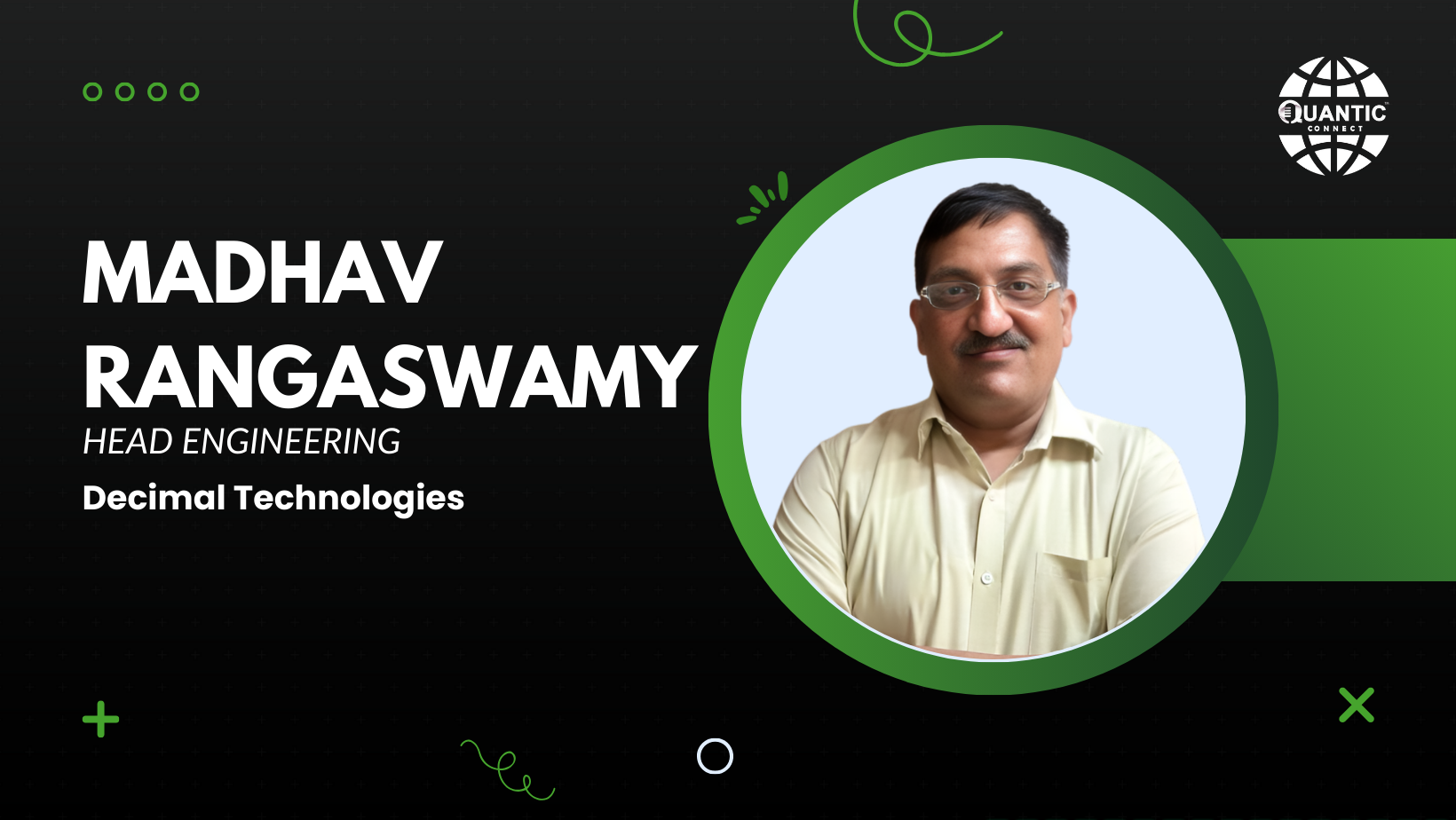
Join Mr. Marquis Fernandes (Director – India Business, Quantic India) in a compelling conversation with Mr. Madhav Rangaswamy, Head of Engineering at Decimal Technologies. He discusses how API-driven architectures are reshaping onboarding and credit workflows, and shares his philosophy on guiding leadership teams to see engineering as a core enabler of business strategy rather than just a technical
Q1. Looking back at your 32+ years in FinTech and BaaS, which single technology shift do you believe had the most profound impact on digital onboarding and credit automation?
The most profound shift has been the move to API-driven ecosystems. APIs allowed real-time integration of identity verification, credit scoring, and regulatory checks, processes that once took days. This has enabled instant onboarding, faster credit decisions, and seamless customer journeys while reducing operational overhead.
Q2. When mentoring CXOs and leadership teams, what’s one mindset shift you encourage to drive engineering-led business transformation?
I emphasize the shift from technology as support to technology as strategy. Leaders must see engineering not as a cost center but as a value multiplier. When engineering teams shape business models, innovation accelerates, scalability improves, and transformation becomes sustainable rather than episodic.
Q3. In your experience, what are the top three pillars to ensure a secure, scalable, and compliant financial platform in today’s cloud-driven world?
- Security-first architecture, embed controls from the design stage, not
- Elastic scalability, modular, cloud-native infrastructure that grows with
- Continuous compliance, automated monitoring and real-time adherence to evolving regulations.
These pillars ensure trust, resilience, and longevity in a highly regulated sector.
Q4. How do you innovate rapidly in financial technology while ensuring you remain compliant with ever-evolving regulations?
By adopting compliance-by-design. Regulatory requirements must be built into product design and development cycles, not bolted on at the end. Pairing agile delivery models with proactive regulatory engagement allows innovation to move fast and responsibly. In financial services, speed matters, but trust is non-negotiable.
As the financial landscape continues to evolve, the organizations that thrive will be those that integrate security, scalability, and compliance into every aspect of their technology strategy. By fostering a culture where innovation and responsibility go hand in hand, financial institutions can deliver transformative experiences while maintaining trust, resilience, and long-term competitive advantage.
